Restaurants have more ways to accept orders than ever, but not every ordering channel supports growth in the same way. Direct orders give restaurants more control over revenue, customer relationships, branding, and repeat business, while marketplace orders provide access to an established customer base. The stronger long-term strategy is to use third-party marketplaces for reach while building a direct ordering channel that brings customers back to the restaurant.
For many restaurant owners, the real question is not whether marketplace platforms work. They do. The bigger question is how much of the restaurant’s business should depend on them.
What Is a Direct Restaurant Order?
A direct order is placed through a restaurant’s own ordering channel, such as its website or branded online ordering system. The customer interacts directly with the restaurant rather than placing the order through a third-party marketplace.
The restaurant controls the menu, branding, ordering process, customer experience, and communication. The order goes straight to the restaurant’s ordering system, giving the business a direct connection with the person making the purchase.
This matters because a customer who orders directly has a clearer relationship with the restaurant. That relationship creates opportunities for repeat orders, promotions, loyalty campaigns, and other forms of customer engagement.
What Is a Marketplace Order?
A marketplace order comes through a third-party food delivery platform where customers browse multiple restaurants in one app or website.
These platforms give restaurants access to people who are already searching for food. A customer can compare restaurants, menus, prices, ratings, and delivery options before placing an order.
That exposure is valuable, especially for restaurants trying to reach new customers. The trade-off is that the restaurant operates inside another company’s marketplace, where fees, platform rules, customer interactions, and visibility are influenced by the platform.
Which Gives Restaurants More Control?
Direct ordering gives restaurants more control.
With a direct ordering channel, the restaurant decides how its menu appears, how its brand is presented, what promotions it runs, and how customers move through the ordering process.
Marketplace platforms place the restaurant alongside many competitors. A customer who discovers one restaurant may see several alternatives immediately afterward.
Direct ordering changes that dynamic. The restaurant’s website or ordering page becomes the destination rather than one listing among many.
That distinction becomes more important as a restaurant builds a recognizable local brand.
Which Channel Gives Restaurants More Customer Ownership?
Direct orders have a major advantage here.
When customers order directly through a restaurant’s own channel, the restaurant has a stronger first-party relationship with those customers. That creates a foundation for future marketing and repeat business.
Marketplace customers, on the other hand, may associate the ordering experience more strongly with the platform than with the individual restaurant. The same customer may order from several competing restaurants through the same marketplace.
For restaurant growth, getting the first order is only part of the job. Turning that customer into a repeat customer is where a direct ordering channel becomes especially valuable.
Are Marketplace Orders Still Useful?
Yes. Marketplace platforms serve an important purpose.
They put restaurants in front of customers who may not know the restaurant exists. Someone searching for burgers, pizza, biryani, kababs, or another type of food can discover a restaurant through a marketplace without visiting its website first.
That discovery can bring in new customers.
The challenge starts when a restaurant depends too heavily on marketplace orders for its entire online sales strategy. The restaurant gains orders but has less control over the customer relationship and may pay significant platform-related costs.
A smarter approach is to treat marketplaces as one customer acquisition channel rather than the entire ordering strategy.
Which Is Better for Restaurant Profit Margins?
Direct ordering generally gives restaurants more room to protect their margins because it avoids relying entirely on third-party marketplace commission structures.
Every restaurant has its own costs, pricing, delivery setup, labor, packaging, and marketing expenses. Marketplace fees add another cost to each order, which affects the amount left after the sale.
Direct ordering gives restaurant owners more control over the economics of each transaction.
For example, a restaurant can promote direct ordering to existing customers through its website, social media, Google presence, email marketing, or printed materials. The goal is simple: bring more customers to an ordering channel the restaurant controls.
That does not mean every direct order is automatically more profitable. Delivery costs, payment processing, discounts, marketing, and other expenses still matter. But the restaurant has more control over how those costs are managed.
Direct Orders vs. Marketplace Orders: A Quick Comparison
| Factor | Direct Orders | Marketplace Orders |
| Customer relationship | Restaurant-controlled | Platform-mediated |
| Brand presentation | Restaurant controls it | Follows marketplace structure |
| Customer discovery | Requires restaurant marketing | Built-in marketplace traffic |
| Competition | Focused on the restaurant | Many restaurants appear together |
| Customer retention | More direct opportunities | More dependent on platform |
| Ordering channel | Restaurant’s own | Third-party platform |
| Revenue control | Greater control | Platform fees affect margins |
| Long-term brand building | Strong | More limited |
The difference is not simply about where an order comes from. It is about who controls the relationship after the order is placed.
Can Restaurants Use Both Direct and Marketplace Orders?
Yes, and for many restaurants, this is the most practical strategy.
A restaurant does not need to abandon every marketplace to build direct ordering. Instead, it can use marketplaces to attract new customers while promoting its own ordering channel to existing customers.
Think of it as two different roles.
Marketplaces help with discovery. Direct ordering helps build ownership.
A restaurant can maintain a presence on major food marketplaces while making its website and direct ordering system easy to find. Customers who already know and like the restaurant have a reason to order directly next time.
Over time, this creates a healthier mix of acquisition and retention.
How Can Restaurants Get More Direct Orders?
The first step is making direct ordering easy to find.
A restaurant website should clearly display its online ordering option. The menu should be easy to browse on mobile devices, and customers should not have to search through multiple pages to place an order.
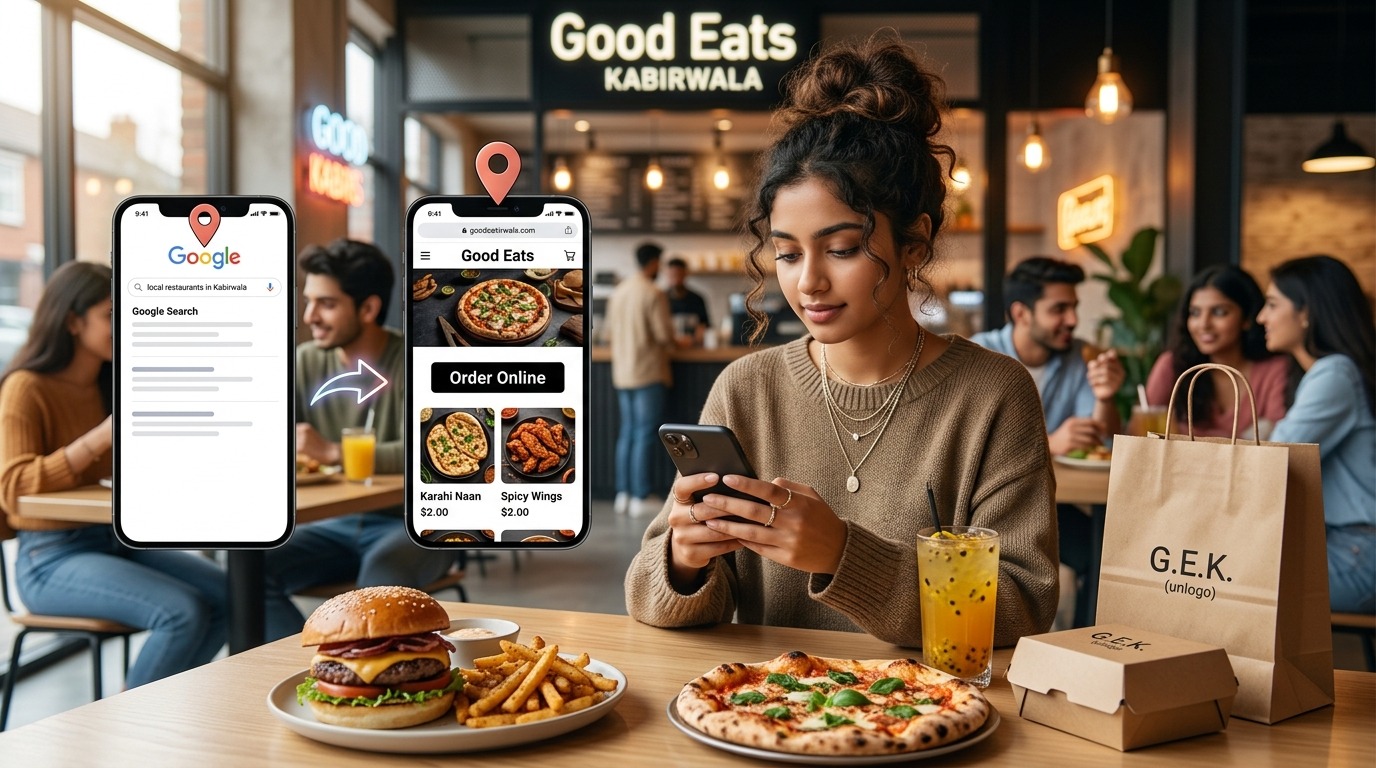
Google visibility matters too. When someone searches for a restaurant by name or searches for food nearby, the restaurant’s website and ordering channel should be easy to reach.
Social media provides another opportunity. Restaurant posts, promotions, food photos, and updates can direct customers toward the restaurant’s own ordering channel instead of sending every customer to a marketplace.
The same idea applies to existing customers. Someone who has already enjoyed a restaurant’s food is a valuable audience. Bringing that person back through a direct ordering channel gives the restaurant a stronger foundation for repeat business.
Why Does Direct Ordering Matter for Long-Term Restaurant Growth?
Restaurant growth is not only about generating more orders today. It is about building a system that continues producing customers tomorrow.
A restaurant that relies entirely on third-party marketplaces is building its online sales around someone else’s platform. Changes in fees, visibility, policies, algorithms, or customer behavior can affect that business.
A direct ordering channel gives the restaurant another foundation.
The restaurant owns the website, controls the branding, manages the menu, and has a direct path between the customer and the business. That creates more opportunities to turn one-time buyers into repeat customers.
The strongest restaurant ordering strategy is not necessarily direct orders instead of marketplace orders. It is direct orders alongside marketplaces, with a clear goal of increasing the share of customers who order directly over time.
How Own Your Order Helps Restaurants Build a Direct Ordering Channel
Own Your Order gives restaurants a way to accept online orders directly through their own ordering channel. The platform is designed around helping restaurants take control of their online ordering instead of making third-party marketplaces the only path between the restaurant and its customers.
For restaurant owners, that means having an ordering channel that supports the restaurant’s own brand while making it easier for customers to order online.
The goal is straightforward: use third-party platforms for customer discovery, but give customers a reason to come back and order directly from you.
Get started with Own Your Order.
Final Takeaway
Marketplace orders can help restaurants reach new customers, but direct orders offer something just as important: control.
Direct ordering gives restaurants greater control over their brand, customer relationship, ordering experience, and revenue structure. Marketplaces remain useful for discovery and reaching people who have not found the restaurant yet.
For long-term growth, restaurants should not have to choose between visibility and ownership. Use marketplaces to get discovered, then build direct ordering into the customer journey so more of those relationships stay with the restaurant.
No comment