
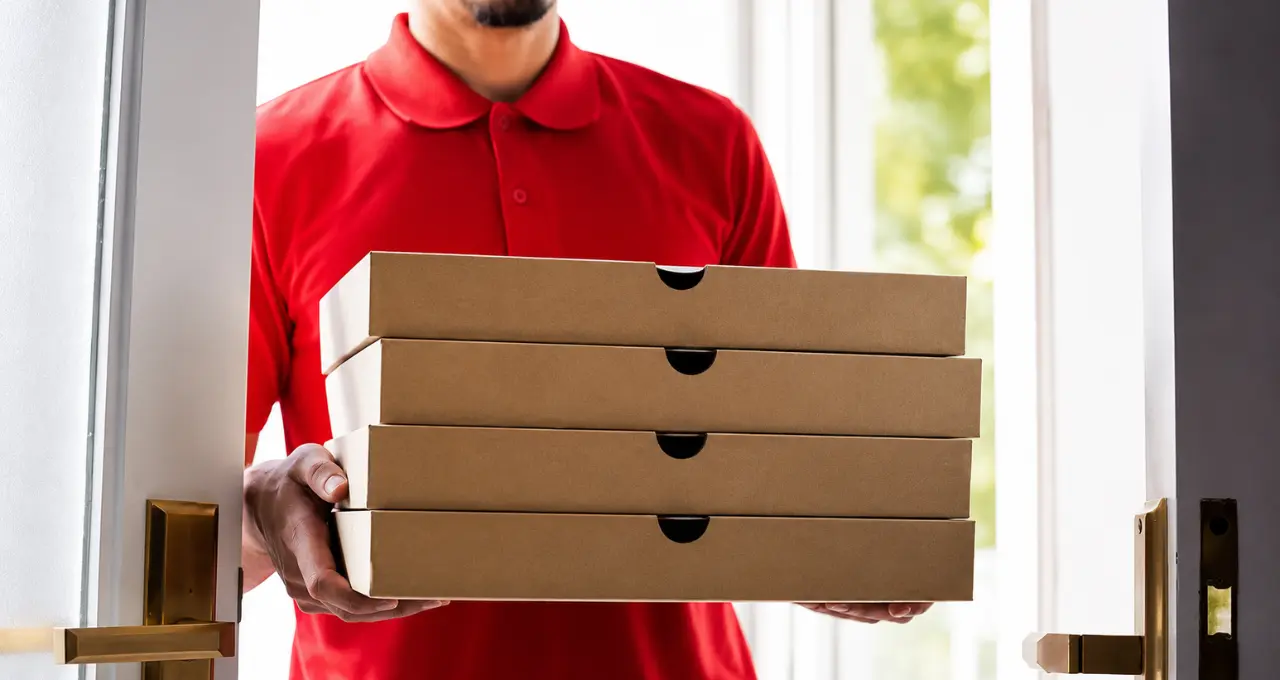
The most effective way for restaurants to reduce food delivery commissions is to shift more customers from third-party marketplaces to direct online ordering. Delivery apps can provide valuable exposure and access to customers, but every order placed through a marketplace may carry a commission that reduces the restaurant’s revenue.
A restaurant-owned ordering website gives customers another way to order while keeping more of the sale within the business. The smartest approach is not necessarily to abandon third-party platforms. It is to use them for customer discovery while building a direct ordering channel for repeat business.
Why Are Food Delivery Commissions So Expensive for Restaurants?
Food delivery platforms provide restaurants with technology, customer acquisition, payment processing, delivery logistics, marketing, and customer support. Those services come at a cost.
For example, DoorDash currently lists delivery commissions of 15%, 25%, and 30% across its Basic, Plus, and Premier marketplace plans, while its pickup commission is 6%. Its commission-free Online Ordering product is separate from marketplace orders.
The actual financial impact becomes significant as online sales grow.
Consider a restaurant that receives $30,000 in marketplace orders each month. A 25% commission would represent $7,500 before considering the restaurant’s food, labor, packaging, rent, utilities, and other operating costs.
That is why restaurant owners need to look beyond total sales. The important number is the net revenue left after delivery commissions and other order-related costs.
How Can Restaurants Reduce Delivery Commissions?
The answer starts with changing where customers place their orders.
Instead of depending entirely on DoorDash, Uber Eats, Grubhub, or another third-party marketplace, restaurants can build a direct ordering channel through their own website.
This creates two separate roles for online ordering platforms:
Third-party marketplaces help restaurants get discovered.Direct ordering helps restaurants build and retain the customer relationship.
That distinction matters. A customer who discovers your restaurant on a marketplace does not necessarily need to place every future order through that marketplace.Your goal should be to make your restaurant’s own website easy to find and easy to use.
1. Build a Restaurant Website With Direct Online Ordering
A restaurant website should not stop at displaying your menu, address, phone number, and opening hours.
It should give customers a direct route to place an order.
With Own Your Order, restaurants can use a branded website with online ordering, menu management, and order management tools. This gives the restaurant its own digital ordering channel rather than making a third-party marketplace the only place customers can purchase from the business.
The customer journey becomes simple:
Google Search → Restaurant Website → Online Menu → Checkout → Restaurant
That direct relationship is the foundation of reducing reliance on marketplace commissions.
2. Turn Third-Party Customers Into Direct Customers
Restaurants do not necessarily need to stop using delivery marketplaces.That can remove an important source of customer discovery.Instead, use marketplaces strategically.
A customer might first discover your restaurant through DoorDash or Uber Eats, try your food, and then search for your restaurant directly the next time they want to order.
Your job is to make your own website easy to find when that second order happens.Your restaurant name, website, Google Business Profile, social media profiles, receipts, packaging, and printed materials should consistently point customers toward your direct ordering channel.
The first marketplace order can introduce the customer to your restaurant. Future orders have the opportunity to happen through your own channel.
3. Add Your Ordering Link to Google Business Profile
Google is one of the most valuable channels for direct restaurant ordering because customers often search for a restaurant when they are already deciding what to eat.
A Google Business Profile can include ordering links that direct customers to an online ordering page. Google states that food-ordering links can appear on a restaurant’s profile across Google Search and Google Maps, subject to eligibility and regional availability.
That creates a powerful path:
“Restaurant near me” → Google Business Profile → Order Online → Your Website
Instead of making customers search for your website, put the ordering option where they are already looking.
4. Promote Direct Ordering on Social Media
Your restaurant’s Instagram, Facebook, and other social channels should do more than showcase food photos.
They can send customers directly to your ordering website.For example, a restaurant can promote a new burger, family meal, lunch special, or weekend offer and include a clear Order Online call to action.
The important part is consistency.Every social profile should make it obvious where customers should go when they are ready to order.
5. Use QR Codes to Move Customers to Your Website
A QR code gives restaurants another way to turn physical customer interactions into digital orders.
Restaurants can place QR codes on:
- Takeout bags
- Receipts
- Table tents
- Menus
- Flyers
- Business cards
- Restaurant counters
- Promotional materials
A customer scans the code and lands directly on the restaurant’s ordering page.
This is especially useful for pickup customers and dine-in guests who already know and trust the restaurant.The objective is simple: make the next order easier to place directly.
6. Give Customers a Reason to Order Directly
A direct ordering website needs traffic.Customers will not automatically switch channels just because your restaurant has a website.
Give them a reason to use it.Restaurants can promote direct-order incentives such as:
- Exclusive website promotions
- Loyalty rewards
- Free add-ons
- Special meal bundles
- Pickup discounts
- Limited-time offers
- Direct-order coupons
The exact offer should fit the restaurant’s margins.
A small incentive that encourages repeat direct ordering may cost less than repeatedly paying a large percentage commission on marketplace orders.
7. Make Pickup Orders a Direct-Ordering Priority
Pickup orders are often easier to move toward a direct channel because the restaurant does not necessarily need third-party delivery logistics.
A customer can place an order through your website, the restaurant prepares it, and the customer collects it.
The fewer outside services involved, the easier it becomes to compare the true cost of each ordering channel.
For restaurants with strong local customer traffic, direct online pickup can become an important way to reduce marketplace dependency.
8. Use a Direct Ordering System With Your Restaurant POS
Order management becomes difficult when staff have to enter the same information manually across multiple systems.
A restaurant POS system can help centralize orders, menu information, payments, and restaurant operations when the ordering platform supports the appropriate integration.
This matters because reducing commissions should not create a new operational problem.
The ideal setup connects your:
Restaurant website + online menu + POS + order management + payment processing
That gives restaurant staff a clearer view of incoming orders and reduces unnecessary manual work.
9. Analyze Commission Cost by Ordering Channel
Restaurant owners should track more than gross online sales.
Look at each channel separately.
Compare:
Marketplace sales
Direct website sales
Pickup sales
Delivery sales
Commission paid
Payment processing fees
Delivery fulfillment costs
Marketing costs
Net revenue
This tells you which channels actually produce the strongest financial result.
A delivery marketplace may generate substantial revenue while producing a lower contribution margin after commissions. A direct ordering website may generate fewer orders initially but leave more revenue per order.
That is the number worth watching.
10. Build Repeat Business Instead of Paying to Reacquire the Same Customer
One of the biggest advantages of direct ordering is the opportunity to build a relationship with your customers.
A restaurant can use its direct ordering channel alongside customer loyalty, email marketing, SMS marketing, and promotional campaigns to encourage repeat purchases.
This changes the economics of customer acquisition.
A customer who repeatedly orders through your own website does not need to be acquired from scratch through a marketplace every time.
Own Your Order is built around direct restaurant ordering and provides tools intended to help restaurants manage online orders and develop their own customer relationships.
Should Restaurants Stop Using DoorDash and Uber Eats?
Not necessarily.
Third-party marketplaces can still be useful for customer discovery, delivery infrastructure, marketplace visibility, and reaching people who have never heard of your restaurant.
The problem starts when a restaurant becomes completely dependent on those platforms for online sales.
A better strategy is a hybrid ordering model.
Use third-party marketplaces to reach new customers.
Use your own website to build direct relationships with existing customers.
This approach recognizes the value of marketplace visibility without making marketplace commissions the cost of every online order.
DoorDash itself now offers commission-free direct online ordering through its Online Ordering product, showing how important direct ordering has become within the restaurant technology market.
How Much Can a Restaurant Save by Reducing Delivery Commissions?
The savings depend on the restaurant’s order volume, commission rate, payment processing costs, delivery method, and the percentage of customers moved to direct ordering.
Here’s a simple example.
Suppose a restaurant receives $20,000 per month through a marketplace charging a 25% commission.
The marketplace commission would equal:
$20,000 × 25% = $5,000
Now suppose the restaurant moves 30% of those orders to its direct ordering website.
That represents $6,000 in monthly sales moved away from the 25% commission channel.
At the same commission rate, that portion represents $1,500 in monthly commission that is no longer being paid.
That is $18,000 per year in commission expense associated with that $6,000 monthly shift.
Actual savings will vary because direct orders still have costs such as payment processing, website or software costs, and delivery fulfillment where applicable. The point is to compare the complete cost of each channel rather than assuming every online order has the same value.
Why Is Direct Ordering Better for Long-Term Restaurant Growth?
The biggest advantage is not simply saving money on one order.
It is building an ordering channel that belongs to the restaurant.
Your restaurant website, brand, menu, customer relationship, promotions, and ordering experience remain connected to your business.
That gives you greater control over how customers discover your menu and how they order.
It also gives you more freedom to test promotions, improve the checkout experience, build customer loyalty, and increase repeat orders.
The restaurant becomes less dependent on a single marketplace for online revenue.
How Does Own Your Order Help Restaurants Reduce Commission Costs?
Own Your Order provides restaurants with a branded online ordering website designed to help customers order directly from the restaurant.
The platform brings together restaurant website functionality, digital menu management, online ordering, order notifications, and order management.
That gives restaurants another path for online sales:
Customer → Your Website → Your Online Menu → Your Ordering System
Instead of sending every customer to a third-party marketplace, restaurants can encourage existing customers to order directly through their own branded channel.
For restaurant owners, that means greater control over the customer journey and an opportunity to retain more revenue from direct orders.
What Is the Best Strategy for Reduce Food Delivery Commissions?
There is no single move that eliminates every delivery cost.
The practical strategy is to reduce dependence on percentage-based marketplace commissions while growing direct orders.
Start with your restaurant website.
Connect your online ordering system.
Add your ordering link to Google Business Profile.
Promote direct ordering on social media.
Use QR codes on physical marketing materials.
Give repeat customers a reason to order directly.
Track sales and costs by channel.
Then gradually increase the percentage of online orders that come through your own ordering system.
That approach gives restaurants a way to reduce commission expenses without giving up the customer discovery that third-party marketplaces can provide.
Start Reducing Your Restaurant’s Delivery Commission Costs
Every percentage point matters when restaurant margins are tight.
You do not have to choose between marketplace visibility and direct ordering. Use each channel for what it does best. Let third-party marketplaces help people discover your restaurant, while your own website gives existing customers a direct way to order.
Own Your Order helps restaurants create that direct ordering channel with a branded restaurant website and online ordering system.
Get started with Own Your Order and build a direct path between your restaurant and your customers.
FAQs About Reducing Food Delivery Commissions
Can restaurants negotiate delivery app commission rates?
Some delivery platforms offer different pricing plans, products, or partnership structures, but the available options vary by platform and market. Restaurants should review the current merchant agreement and compare the total cost of each plan before signing or changing a contract.
Do food delivery commissions apply to taxes and tips?
Commission calculations depend on the specific delivery platform’s merchant agreement and the order structure. Restaurants should check the platform’s current fee documentation to understand exactly which portions of an order are included in commission calculations.
Is hiring restaurant delivery drivers cheaper than using delivery apps?
Not automatically. An in-house delivery operation introduces expenses such as driver wages, payroll taxes, insurance, fuel, vehicle costs, scheduling, and management. Restaurants need to compare the total cost per completed delivery against third-party fulfillment.
Should a restaurant charge different prices on delivery platforms?
Restaurants should consider their local pricing rules, platform agreements, customer expectations, and overall menu strategy before using different prices across channels. Any price difference should be calculated against the actual commission and operating costs rather than used as a simple markup.
How often should restaurants review their delivery costs?
Monthly is a practical starting point for most restaurants. A monthly review gives owners enough order data to compare marketplace commissions, direct-order revenue, payment processing, delivery costs, promotions, and net revenue before making changes to their ordering strategy.
No comment