What makes a restaurant website good for online sales is more than just , a good design. It needs to be fast mobile-friendly, and built to convert visitors into paying customers. A restaurant website should do more than display food photos and an address. A good restaurant website makes it easy for customers to find the menu, understand what the restaurant offers, place an order, and return for their next meal. Clear navigation, mobile-friendly design, an easy online ordering system, useful menu information, strong local SEO, and a trustworthy brand presentation all contribute to better online sales.
For restaurant owners, the website is not just a digital business card. It is one of the restaurant’s own sales channels.
What Should a Restaurant Website Do for Online Sales?
A restaurant website should move visitors toward an action.
That action may be placing an online order, making a reservation, calling the restaurant, viewing the menu, or visiting the location. For online sales, though, the path should be especially clear: the customer should be able to go from landing on the website to placing an order without unnecessary steps.
A website with beautiful design but a confusing ordering process loses its value quickly. The same applies to a website with an excellent menu that hides the order button.
Good restaurant websites connect information, trust, and ordering in one simple customer journey.
Why Does Mobile-Friendly Design Matter for Restaurant Sales?
Most restaurant customers browse menus and order food from their phones.
That makes mobile design a sales feature, not just a design preference. The menu should be readable on a small screen, buttons should be easy to tap, images should load properly, and customers should not need to pinch and zoom their way through the ordering process.
The ordering button should remain easy to find as customers move through the website.
A mobile visitor is often looking for an immediate answer: What do you serve, how much does it cost, and how do I order?
A good restaurant website answers all three quickly.
How Does an Online Menu Affect Restaurant Orders?
The menu is one of the most important sales elements on a restaurant website.
Customers want to know what they are ordering before they commit. A useful online menu gives them clear dish names, descriptions, prices, available options, and relevant dietary information.
Food photography has a role too. A strong image can help customers understand the dish and make a decision faster. But images should support the menu rather than make it difficult to navigate.
The best online menus balance visual appeal with useful information.
Most importantly, the menu should connect directly to the ordering process. A customer who finds a dish they want should not have to leave the menu and search for the order page.
Where Should the Online Ordering Button Appear?
The online ordering option should be highly visible throughout the website.
A customer should see a clear call to action from the homepage, menu, and other important pages. Using vague wording such as “Click Here” gives visitors little context.
A direct phrase such as “Order Online“ tells customers exactly what happens next.
The goal is not to fill every section with buttons. It is to make the next step obvious whenever a customer is ready to buy.
How Does Restaurant Website Speed Affect Online Sales?
Website speed affects how quickly customers reach the information they need.
Large food images, unnecessary animations, excessive scripts, and poorly optimized website elements can slow a restaurant website down. A customer waiting for a menu to load has plenty of other restaurants to consider.
Fast-loading pages create a better path from search to menu to order.
This matters especially on mobile devices, where customers may be browsing from a weaker connection while deciding where to eat.
What Information Should a Restaurant Website Include?
A restaurant website should give customers enough information to make a confident decision.
Important information includes the restaurant’s menu, location, hours, phone number, ordering options, delivery or pickup details, and the type of food served.
Depending on the restaurant, customers may want additional information about ingredients, dietary choices, halal certification, catering, private events, or special menus.
The key is relevance. Every important question a customer has before ordering should have a clear answer on the website.
Why Is Local SEO Important for Restaurant Websites?
A restaurant website needs to be visible to people searching for food in its service area.
Local SEO helps connect the restaurant with relevant searches, such as cuisine-related searches, restaurant names, neighborhood searches, and “near me” queries.
The website should clearly communicate the restaurant’s location, cuisine, services, menu, and other relevant details. Consistent business information and useful location-focused content strengthen that connection.
Google Business Profile optimization and the restaurant website should work together rather than operate as separate marketing efforts.
When someone searches for a restaurant and finds its website, the site should immediately confirm that they have found the right place.
How Does Website Design Build Trust?
Customers decide whether to order before they ever taste the food.
A professional website helps establish trust through accurate information, real food photography, clear pricing, customer reviews, recognizable branding, and an easy-to-understand ordering process.
Trust also comes from consistency.
The restaurant name, logo, menu, contact information, food style, and location details should match across the website and other online profiles. Conflicting information creates unnecessary doubt.
A restaurant does not need an overly complicated website to look credible. It needs a website that feels current, accurate, and easy to use.
Should a Restaurant Website Connect Directly to Online Ordering?
Yes. A restaurant website built for sales should make online ordering part of the core experience.
The website attracts the visitor, introduces the restaurant, presents the menu, answers questions, and then gives the customer a direct route to place an order.
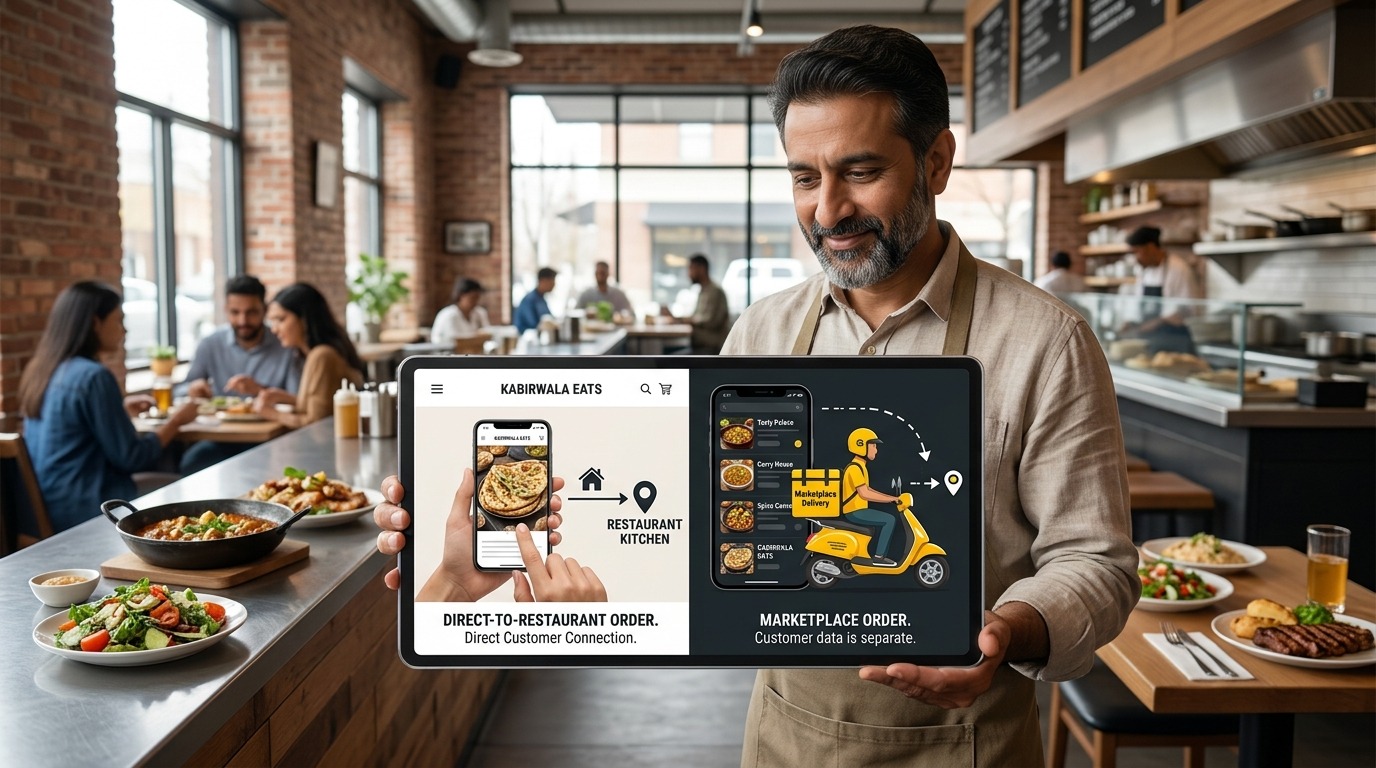
This is particularly valuable when restaurants want to increase direct orders rather than send every customer to a third-party marketplace.
A direct ordering channel keeps the restaurant’s website connected to the transaction instead of making the website only an information page.
What Makes a Restaurant Website Better Than a Basic Menu Website?
A basic restaurant website tells people what the restaurant offers.
A sales-focused restaurant website helps them act on that information.
There is a major difference between these two approaches.
A basic site may have a homepage, menu, contact page, and a few photos. A website designed for online sales considers the entire customer journey. It makes the restaurant easy to find, makes the menu easy to understand, answers common questions, builds trust, and removes unnecessary barriers between the customer and the order.
That is what turns website traffic into business.
How Can Own Your Order Help With Restaurant Online Sales?
Own Your Order helps restaurants build a stronger direct online ordering channel around their own business.
Instead of treating the website as a static page, restaurants can use their online presence to connect customers with their menu and direct ordering experience. This gives restaurant owners another way to generate online sales while keeping the restaurant’s brand at the center of the customer journey.
The broader goal is simple: make it easier for customers to find your restaurant, choose what they want, and order directly from you.
Final Takeaway
A good restaurant website is built around the customer, not just the restaurant’s design.
Fast pages, mobile-friendly navigation, a clear menu, visible ordering options, useful information, local SEO, strong photography, and trustworthy branding all contribute to online sales.
The best restaurant website does not make customers work to place an order. It takes them naturally from “What is this restaurant?” to “I want this” to “Order Online.”
That is what makes a restaurant website a sales channel rather than simply another page on the internet.
No comment